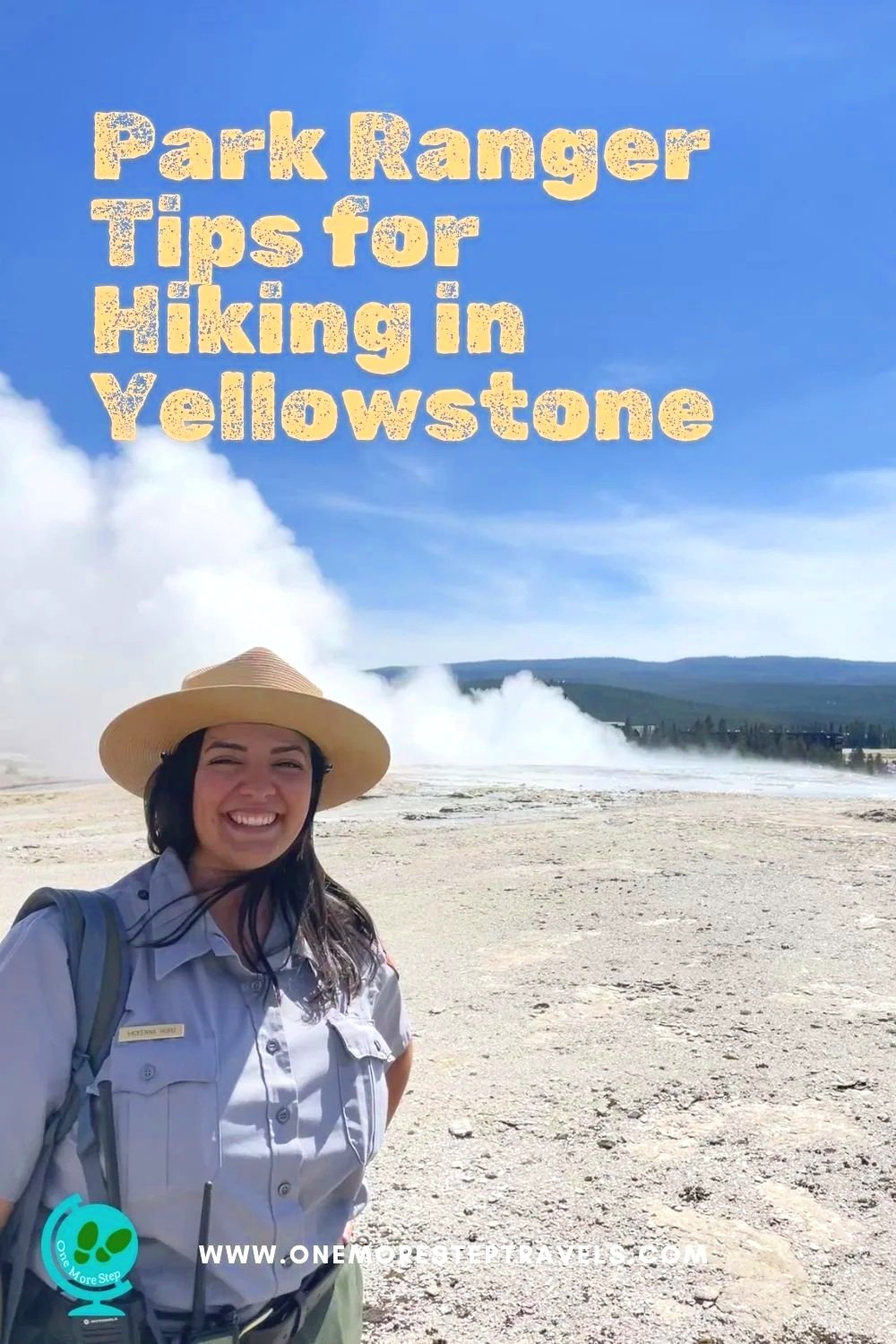
Pro Tips for Hiking in Yellowstone from a Former Park Ranger
Disclosure: This post includes affiliate links and sponsored content for products and experiences that I actually do use, recommend, or think are worthwhile. I may earn a commission if you click through.
Planning a trip to Yellowstone? I’m sure you’ve heard of the bison and the geysers, but did you know Yellowstone is also an incredible destination for hiking?
With over 2.2 million acres to explore—making Yellowstone the second largest National Park in the contiguous United States—there is a wide range of the types of trails you can discover within the park.
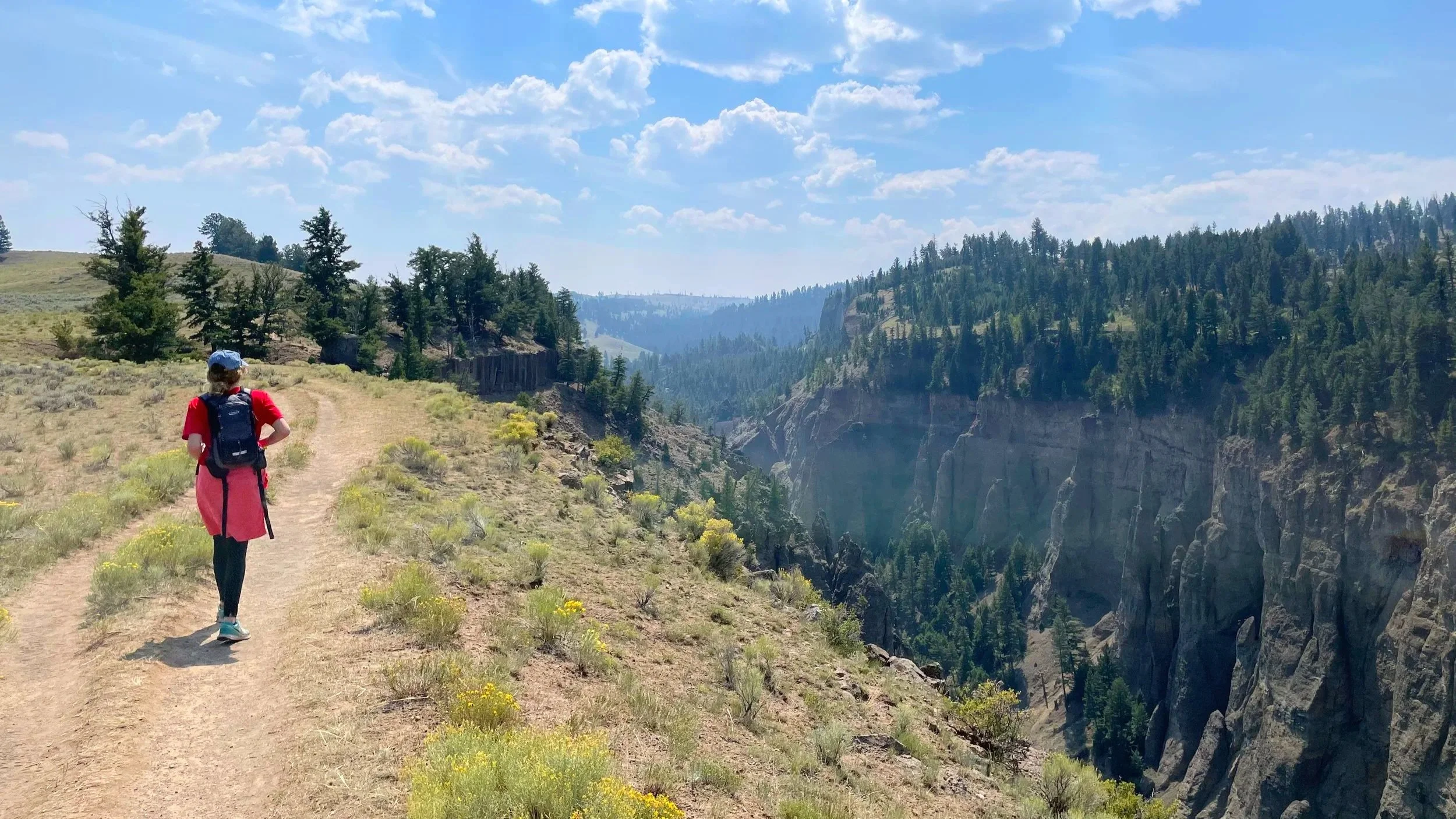
Of course, there are many geyser basins with boardwalks, but the hiking trails go far beyond that. You can wander deep into the wilderness and find yourself in the most secluded place in the lower 48 states away from roads in the Thoroughfare region. Or, you can hike along popular rivers to scenic waterfalls.
You can climb mountain peaks, go wildlife watching as you traverse through valleys, and find hidden thermal pools and geysers. There is so much to discover in Yellowstone!
I’ve had the pleasure of hiking many trails in Yellowstone while I worked as a ranger there. Here are my top three tips for hiking in Yellowstone National Park.
P.S. Stay tuned for my Yellowstone hiking guide—where I’ll go beyond tips and dive deeper into specific trails—and my complete guide to Yellowstone for first time visitors!
Tip #1: Navigate thermal areas wisely
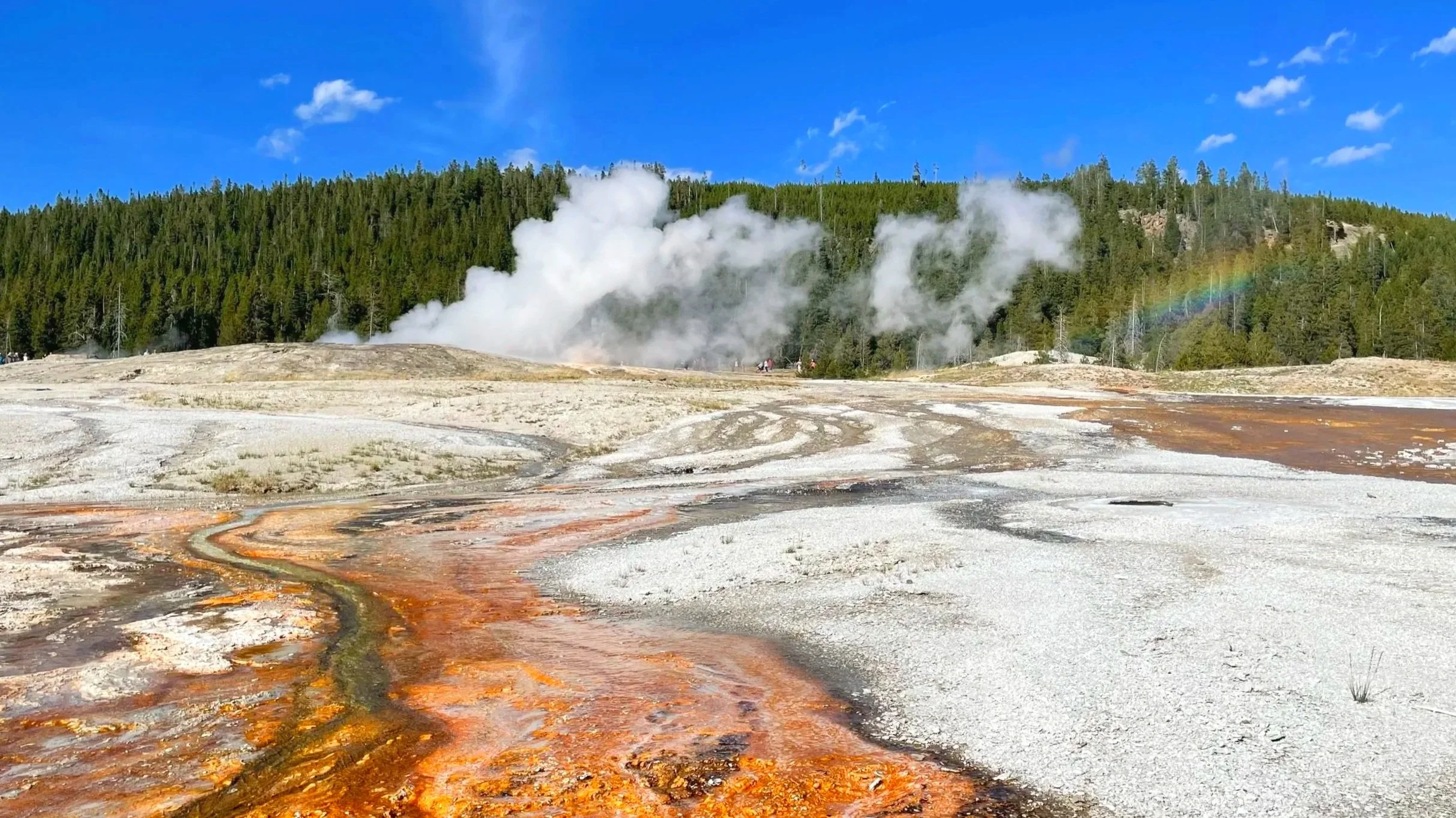
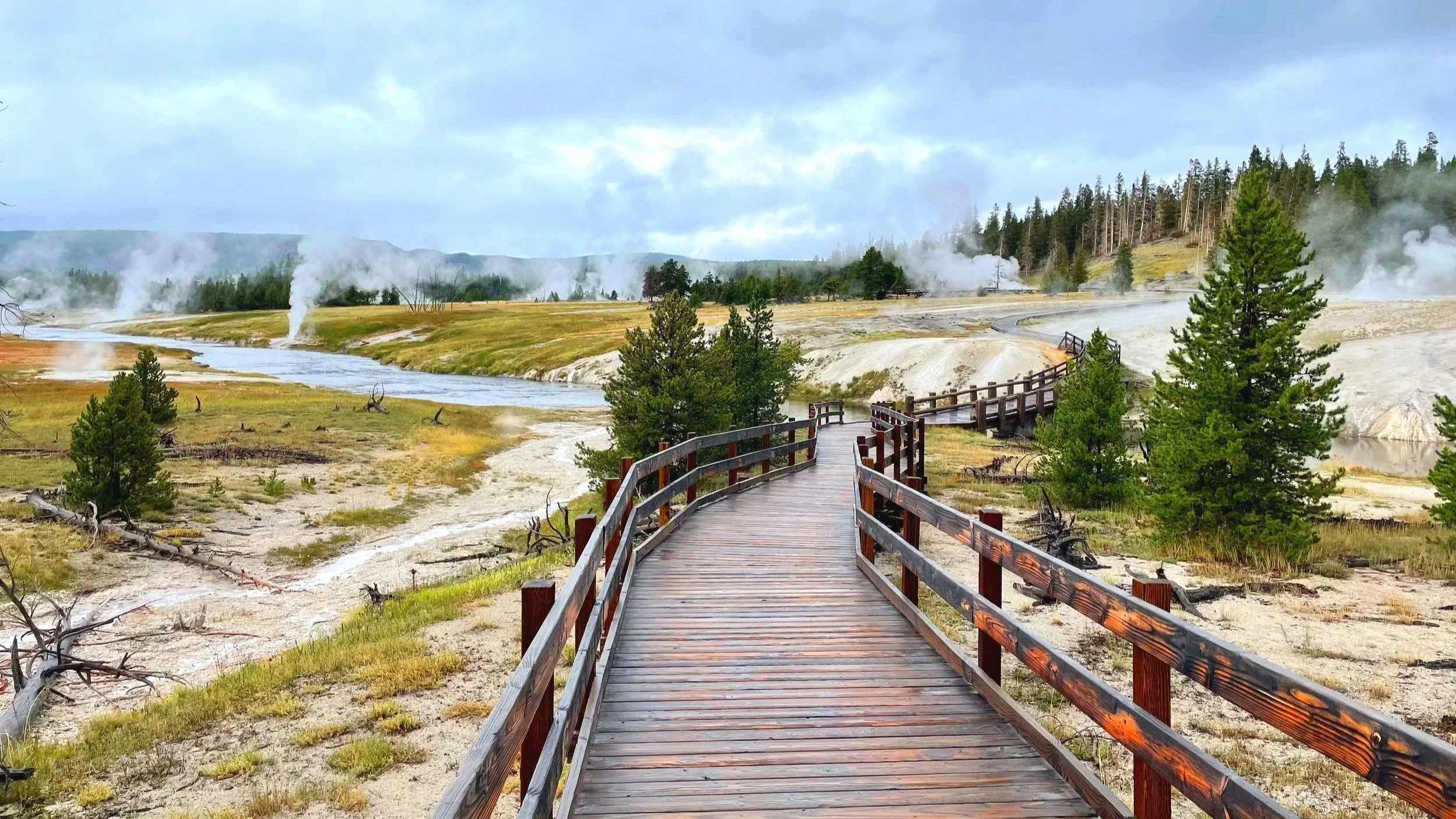
To put this tip as plainly as possible: don’t go off the boardwalk when there is one or walk in thermal areas!
Reason 1: Thermal areas are hot!
The ground can easily break underneath you and may even be hiding steam vents or hot water, both of which can burn you.
Not to be fear-mongering, but people, pets, and wild animals have died in the thermal pools in Yellowstone. Though the water in many pools is a striking blue and looks like a great place for a refreshing swim, it is deceiving and the water temperatures can be as hot as 200 degrees.
Don’t believe me? When you visit Old Faithful, walk behind the Old Faithful geyser to the pool called Blue Star Spring. If you look closely, you may see bones from a poor bison calf that fell in and couldn’t get out before being boiled.
Want more insider knowledge when you visit Yellowstone? Consider taking a tour! This tour of the lower loop of Yellowstone includes many of the major attractions in Yellowstone—Old Faithful, Grand Prismatic Spring, and Grand Canyon of the Yellowstone—all in one day, without the hassle of navigating the park on your own. It’s an itinerary I would take all my visitors on when I lived in the park!
Reason 2: Thermal areas are fragile!
The bacteria that grows in thermal areas (Thermophiles) are very fragile and have been used to study many things, including life on other planets, the beginning of life on earth, Covid vaccines, and other science-y stuff! Pretty cool. When you see Thermophiles, don’t walk in them, draw in them, or touch them.
If you are in more secluded areas without boardwalks, look for signs of thermal activity which can include hot water pools, cracked ground with little to no vegetation, the smell of sulphur, and steam coming from the ground. Avoid walking through these areas and instead walk around them.
Side note: If you are trying to hike in all US National Parks, sign up to receive my free National Park Checklist using the form below!
Tip #2: Be smart around wildlife
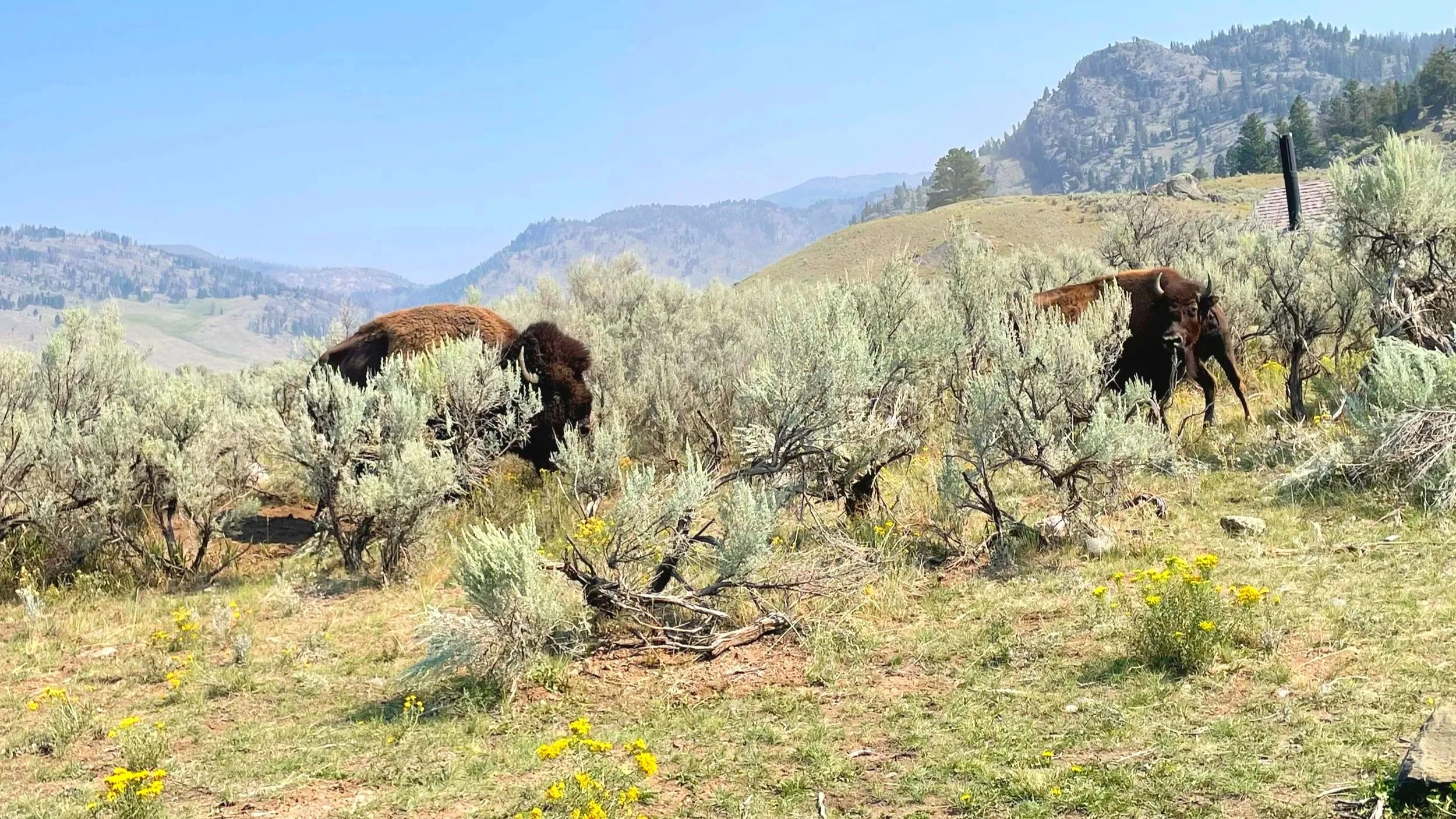
Yellowstone is known for being a haven where wildlife of all kind live. Within the park, you may see black and grizzly bears, bison, wolves, elk, moose, marmots, owls, fish, and much more.
Keep your distance from animals, including bison, and make noise to avoid surprising them. A surprised animal is often more dangerous than one that is well aware that you are around and can avoid coming into contact with you.
A note about bison: they are big, fast, and horned. (And during rut season… horny.) Don't pet them! Don’t aggravate them, crowd them, walk too close to them, or stand in their path if they are walking in your direction. They can have tempers and be very dangerous if they decide to charge you.
Grizzly bears are another real threat in Yellowstone. Stay out of bear management areas (areas with heightened bear activity, generally in the spring and early summer), and know of potential bear dangers before going on specific trails. It is strongly advised for each hiker in your group to carry bear spray in an easy-to-reach place and know how to use it properly.
Quick ranger tip: Bear spray does not work like bug spray—don’t spray it on yourself and think the bears will avoid you! It is a form of really strong pepper spray that, when sprayed at bears, will get into their eyes and fill their senses and make them run away instead of continuing to engage with you.
Several places throughout the park provide bear spray rentals, so you don’t even have to bring your own! It is the most effective way to keep yourself safe from bears, along with hiking in a group. Which brings me to my last tip…
But first—if you want to experience the incredible wildlife of Yellowstone, but from a safe distance, this tour of Lamar Valley—my favorite area for spotting wildlife—is a great way to do so! You have the potential to see wolves, bears, elk, and more on the 8-hour tour. Just keep in mind that in order to see many animals when they are most active, that will mean starting your day early!
Tip #3: Don’t hike alone
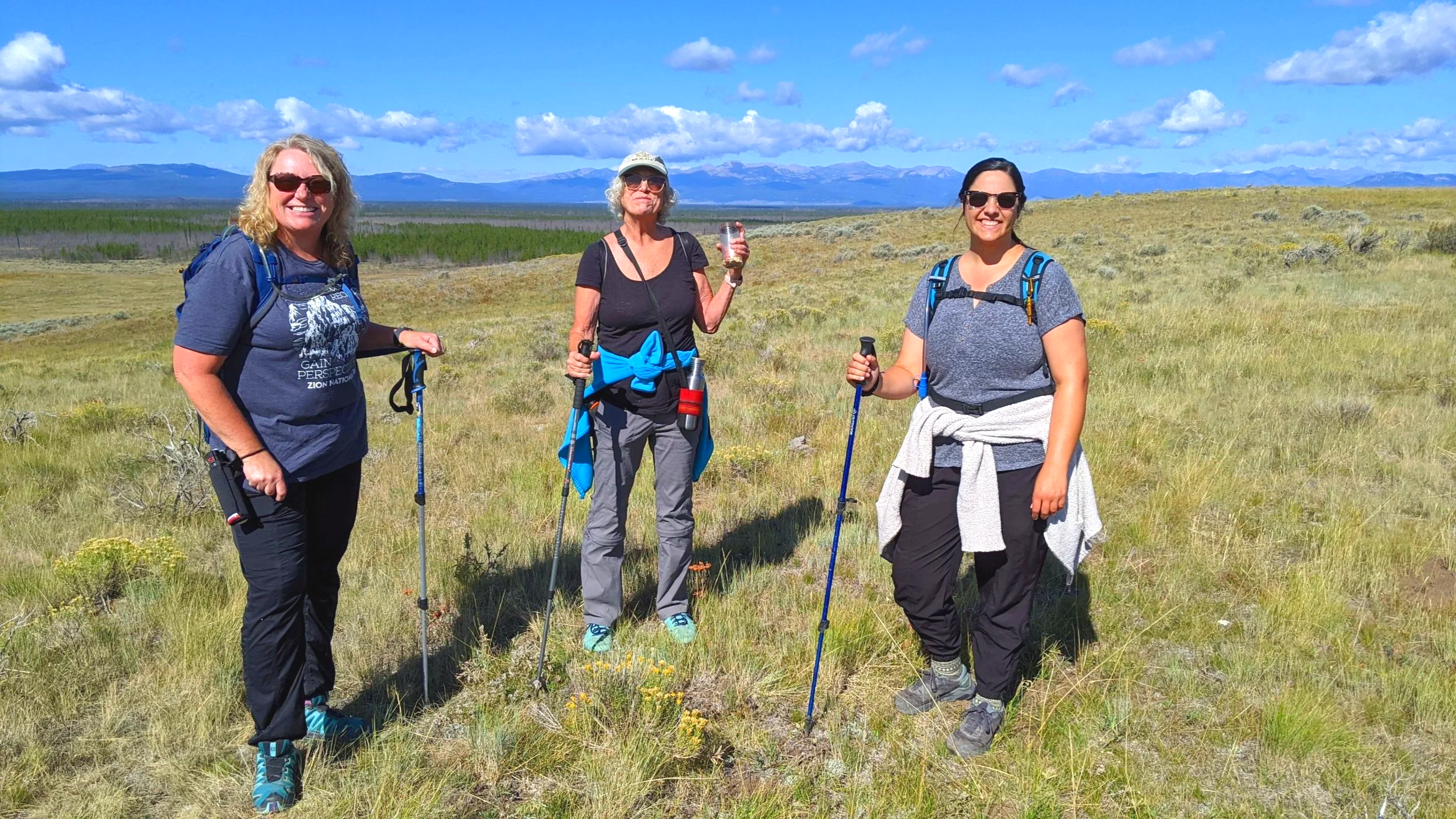
It may feel like hiking alone isn’t even possible in Yellowstone because of all the crowds and, admittedly, I have done a few of the more crowded hikes alone. If there are lots of people around making a lot of noise, there is a far less chance of animals being a threat in the area.
But if you want to really enjoy nature without all the crowds, don’t be afraid to go into more secluded areas—with your travel group, of course!
I hike alone all over the world, but Yellowstone and areas with lots of predators are places I always hike in a group.
Mountain lions, and wolves, and bears, oh my! Yellowstone has them all. They are dangerous, but much less likely to approach you if you are hiking with a group.
If you're the type to choose the bear over the man, hike with a group of your closest girlies and avoid both!
Hiking in a group is also wise in Yellowstone because the Continental Divide goes through the park, which means the weather can be unpredictable and change rapidly. Yellowstone is in a very remote area and having someone with you to make decisions with when the going gets tough is not just great for your morale, but can be lifesaving as well.
Don’t have anyone to hike with? Take a tour or find a local group! This tour takes small groups on one of my very favorite hikes in the park—the loop along the Grand Canyon of the Yellowstone. You will of course see crowds at all the major viewpoints, but then after just a few minutes the trail clears and you will have unmatched views without competing for them!
Tying it all together
Which tip surprised you the most?
I hope I didn’t scare you from hiking in Yellowstone! On the contrary, when following these tips, Yellowstone can be one of the most rewarding places to hike. It is an adventurer’s dream and there are unique surprises around every corner that you won’t find anywhere else in the world!
Another favorite place of mine to hike is Yosemite. Check out my Yosemite National Park Guide for First Timers or my Yosemite Hiking Guide if that is another place on your National Park bucket list!
Looking for more hiking tips? Check out my Hiking Tips page!
Pin for later!